8 Tips for Preparing Nursery Staff for Ofsted Inspections

AD - This is a PR collaboration.
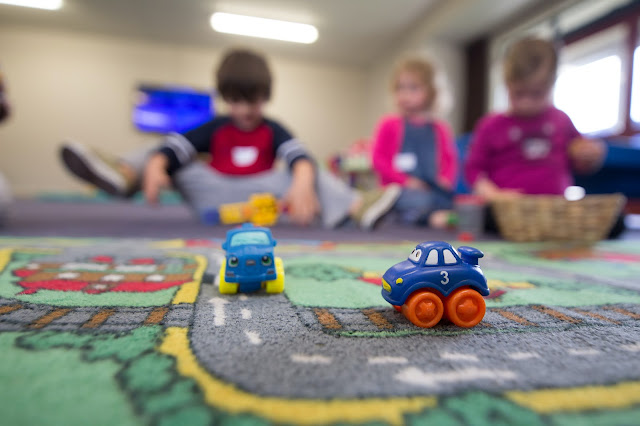
The Office for Education, Children's Services, and Skills (Ofsted) play an important role within younger classroom settings. As nurseries will obtain a rating from this governing body, it is important to appreciate some steps to take which can ensure that your school receives the credit that it deserves. Let us examine eight sure-fire suggestions so that you can be prepared for what is in store.

Employee Documentation
Staff members should be able to present the necessary documents to an Ofsted official when asked. Here are some important forms to possess:

· A full list of their qualifications.

· Evidence of anyone who has completed a first-aid course.

· A list of all children, their names and their birthdays.

· Fire safety arrangements and any plans for similar emergencies.

Educational History
Ofsted officials are obviously concerned about the welfare of your children from an educational point of view. Therefore, be certain that additional records are accurate and up to date. This information can include achievements, shortcomings, any type of disciplinary actions, attendance reports, and children who may be actively enrolled within a social care plan. Educator EYFS tracking software can be used to generate accurate reports so that a clear picture is presented from the beginning.

Physical Classroom Settings
Ofsted personnel will carefully scrutinise the conditions of a classroom, so spend some time making certain that everything is neat and tidy. Staff members should also inspect other areas such as the lighting within stairwells and the functionality of emergency exits. Staff should also make sure that the fire alarm and school safety sensor are in place and in working condition.

Communicate the Upcoming Inspection with Staff Members
Employees should always be made aware of an upcoming inspection so that they have adequate time to prepare. As this article notes, most nurseries are only provided with 24 hours notice. This is why communication is critical.

Speak with Those Who Have Undergone Past Inspections
One or more staff members may have experienced Ofsted inspections in the past. Discuss their experiences and ask for any advice. This type of insight can help to guarantee a positive rating.

Ensure that Staff Members are Calm and Collected
Ofsted inspections can sometimes be slightly stressful. This partially arises from the fact that the careers of your staff members may be affected by the subsequent rating. Make it a point to provide additional support the day before the visit. This is also an excellent time to answer any questions that they may have.

Encourage Employees to Collaborate with Ofsted Personnel
The chances are high that staff members will be asked questions by Ofsted inspectors. They should be prepared for this scenario so that they can provide detailed answers upon request. This also shows that they are keen to adopt a more proactive approach within modern nursery settings.

Positive Ofsted ratings are some of the best ways to illustrate that a nursery school is keeping the best interests of its children in mind. Following these preparatory steps will help to guarantee a smooth and pleasant experience.


Historic Newspapers - Personalised Burnley FC Newspaper Book

AD - I was sent this product for the purpose of this review and was compensated for my time.


Father's Day is right around the corner - this year is flying by. I don't know about you but I really struggle when it comes to gifts for the men in my family. Thankfully, Historic Newspapers got in touch, suggesting one of their personalised Football history books to gift to someone special this Father's Day. I'd never seen their products before and thought, wow - what a unique idea!

Nick and I decided to order one of the football history books for his step-dad who is a huge Burnley FC supporter. I know, I know - someone has to support them, haha. Ordering on the website was very quick and stress-free. I simply selected the book that I wanted to order, then personalised by typing the giftees name, and by adding a personal message.


You can also upload a photo, and select a certain cover which vary in price - it's great and as I've already mentioned, very easy to do. The A4 leatherette with colour pages - £39.99, A3 brown leatherette with colour pages - £44.99, and last but not least the A3 luxury black leather, with colour pages, and free embossing - £59.99. There are additional extras too such as embossing, or gift boxes for £5 each.

This personalised Burnley FC history book is a must-have for all Clarets. The history starts in 1913, and the earliest newspaper reports are so fascinating - it's like stepping back in time. It's great to learn about some of the teams most memorable matches, and key players. Having all these newspaper clippings in one book is so special - it's quite incredible to flick through and watch the clubs history unfold before your very eyes. I have to say, seeing Sean Dyche at the end really made me smile! 


I can't recommend this book enough - it's going to be a gift that is enjoyed for many, many years. 
Nick's stepdad is going to be made up with this incredible, and thoughtful gift. Visit the website to take a look at Historic Newspapers full range of football history books.

Would someone in your family like a football history book? What team do they support?


Masha and the Bear Doll & Winter Bear Treehouse Playset - Review

AD - We were sent these products for the purpose of this review, however, all opinions are my own.


Masha and the Bear is a favourite in our house! I don't get it myself - it seems a bit wild but the kids cannot get enough of the chaos! With this in mind, I was delighted to accept a couple of toys from the range to review - and to visit our local Entertainer store to see them in-store.

The first toy we decided to open was the Masha and the Bear Winter Bear Treehouse Playset. Suitable for children from 3 years it retails at a respectable £20.00. Included with the set is the house itself, Masha figure, Bear figure, snowman, and over 15 other accessories - including Bears infamous armchair, and juggling set.


It's quite a compact playset and once opened up all the attached furniture pieces such as the stove, and fridge folds down nicely. The smaller accessories can fit inside the breadbin, in the pan, or chest - it's a lovely touch and one which keeps children engaged in play. As a parent, I must say that I was a little disappointed that the figures and accessories don't all fit inside neatly once put away. It means that many of the pieces have to be stored separately, and will be prone to being lost. If the playset was a little larger everything would be able to fit inside - it would have made it perfect.

Our favourite part of the Masha and the Bear Winter Bear Treehouse Playset has to be the figures - they are so like the show and articulated at the hips. I keep finding them inside Ava's rucksack as she likes to take them to and fro. Overall, it's a fabulous little set and who can argue with the price?


Next, we have the Masha and the Bear 23cm which is suitable for children from 3 years of age and retails at £20.00 - however, it's currently in the sale. Masha looked super cute in the box and Ava couldn't wait to get her out of the box. The doll is a lovely size and weight for young children like Ava to carry around and she really likes how you could pull down her headscarf, to expose her little pineapple ponytail. You can grab both toys online, and in-store from The Entertainer.


Exploring Moral Values with Your Child

 AD - This is a PR collaboration.


Parenting is undoubtedly a challenge. Not only must we put food on the table for our children, ensure there’s a safe place for them to call home, and help them with their homework, but we must also help them become good people with a valuable set of morals to live by. What you teach your child while they’re young will help guide them and determine whether or not they grow into good, kind adults. Here are some tips from an independent school in Essex on exploring moral values with your child…

Respect
Discuss the concept of respect with your child. Ask them if they know what it means and provide some examples of respectful and disrespectful behaviour. For example, the man in the shop who was yelling at the staff was portraying his anger in a disrespectful way, which only made the problem worse. When your child said “thank you for having me” after spending time at someone else’s house, they were displaying respectful behaviour. When your child has a temper tantrum and shouts at you, point out that they are being disrespectful, so that they understand the difference. Teach your child that all people should be treated with respect, as we are all equals.

Politeness
Being polite is similar to being respectful, in that both require us to remember our manners. Remind your child to say please, thank you, and sorry when necessary until they remember to say it without your prompt. Explain to them that when people are talking, it’s polite to listen rather than butting in and talking over people. Teach them that if they are impolite and unpleasant, people will be less likely to want to be their friend.

Gratitude
As mentioned above, saying thank you is important, but gratitude extends beyond this. Help your child understand the concept of gratitude by asking them to share a few things they appreciate each day. This will help them develop an optimistic attitude, as they will be more inclined to focus on the good things that happen to them rather than the bad. It will also help them acknowledge the kind things that other people do for them.

Sharing
When your child is playing with their siblings or friends, teach them the importance of sharing. The same applies when they are eating a bag of sweets or another treat; offering to others is a kind thing to do. Let your child know that sharing is kind and if they share with other people, those people are more likely to share back.

Of course, there are lots more moral values that you can explore with your child, many of which you’re probably teaching them without even realising. They will also learn various moral values and social skills from their teachers, peers, and other influential people in their lives, but it’s crucial that you try to be a good role model nonetheless.

Understanding Your Child’s Learning Style

 AD - This is a PR collaboration.

To help your child get the most out of their education it may be useful to identify their unique learning style and tailor exercises and activities to suit. There are three main learning styles: visual, kinaesthetic and auditory. Children will lean more towards one of these styles and deciphering which category they fall into can help to unlock their learning potential. An independent school in Buckinghamshire has shared the following information about the three-common learning, to help you maximise your child’s academic success.

Visual
Visual learners tend to retain and recall information better if they see it written down or presented to them with images or charts. They usually like things such as drawing, reading, and painting. Visual learners may struggle to concentrate on spoken explanations and find it more difficult to recall information they have heard rather than seen. Tip for visual learners: Have them create flashcards, mind maps, and brightly coloured posters when learning new information.

Kinaesthetic
Kinaesthetic learners process information best if they can be physically engaged with the subject matter. They may benefit from acting things out or creating or building things to help them retain information. Kinaesthetic learners usually enjoy sport, dance, drama or other physical activities. They may struggle with traditional, classroom-based learning methods which focus on reading, writing, or listening to verbal explanations. Tip for kinaesthetic learners: To secure fresh knowledge have them teach what they have just learned to someone else. This will allow them to actively engage with the information they are covering.

Auditory
Auditory learners are better at understanding spoken instructions than written ones and have better recall if they have heard something out loud. They generally enjoy music and singing and are often quite talkative. Auditory learners find it difficult to retain the information they have read and may find it difficult to concentrate when reading. Tip for auditory learners: Recording themselves reading out loud and then listening back to the information is a great way for auditory learners to cement their knowledge. Both speaking out loud initially and then listening back will suit their learning style and help them to understand the topic they are covering.

Helping Your Child Become More Independent

 AD - This is a PR collaboration.

Part of our role as parents is to teach our children about the world and be there to hold their hand along the way. Although you will always want to be there to guide and mentor your child through life's ups and downs, it is equally important to empower them to stand on their own two feet. Teaching your child to become more independent allows them to navigate life with confidence and resilience, helping to develop their sense of self and encouraging them to take new challenges in their stride. To help you teach your child to be more independent, take a look at the following advice from an independent school in Wolverhampton.

Don’t Do It All For Them
Look out for parts of your child’s routine where they don’t actually require your assistance. If you find yourself running to the kitchen to get your 7-year-old a drink whenever they ask or putting away your 10-year-olds laundry, it may be time to consider passing them the torch on certain tasks. Children often learn to expect parents to meet all of their needs but setting the expectation that they have to do certain things for themselves will encourage them to be more self-reliant.

Give Them Responsibilities
A family contribution chart is a good way to introduce your child to responsibility. Each week you could give your child certain tasks to complete such as taking out the bins or washing the dishes. This teaches your child that they have an important role to play in the upkeep of the household and that they are an integral part of the family unit. Your child will feel a sense of competence as they complete household tasks independently and will benefit from knowing you’ve entrusted them with the responsibility.

Allow Them to Make Decisions
Independent thought and decision-making are important skills that can be developed over time. Instead of micromanaging every part of your child’s day, try giving them choices instead. You could start by allowing them to choose their own outfit or pick which cereal they want for breakfast. This encourages children to consider and weigh up their options helping them develop confidence in their own decision-making.