How To Raise An Environmentally Conscious Child

 AD - This is a PR collaboration.

Climate change is no longer something we can ignore. More and more people are adapting their lives to take control of their carbon footprint and to help protect the planet. Educating children about the significance of climate change is essential, and is a responsibility that falls on every parent. Introducing kids to environmentalism from an early age will teach them how to live their lives in harmony with the natural world. For some tips on where to start, take a look at the advice from an independent school in Surrey.

Be A Role Model
Simply talking to your child about climate change isn't enough. You need to advocate for environmentalism in your day-to-day life to set an example for them to follow. Expressing your own interest and enthusiasm will inspire them and will help to raise them in an environment where climate change is very much a part of the conversation. Try to live your life in an eco-friendly way and your child will adopt your good habits.

Get Into Nature
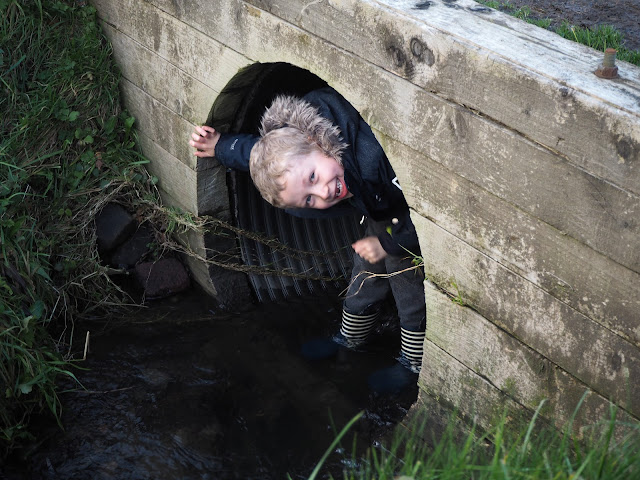
Talking about melting ice caps and temperature change can easily be lost on a small child. It's important to frame environmentalism in a way that caters to their level of understanding. Immerse your child in nature at every opportunity you have, and help them develop an affinity with the natural world. Explore local parks, collect leaves, feed ducks, put a bird feeder in your garden. Explain how important it is that we do what we can to look after the plants and wildlife you come across.

Make It Fun
Children are much more likely to show interest in things they find enjoyable. Make recycling into a game, perhaps using a scoreboard to add points whenever they put an item into the recycling bin. Get your hands dirty in the garden by planting a vegetable patch. Kids will love to get involved with the planting of seeds and will feel a sense of pride when they get to harvest something they have grown themselves.

Back To School Birthday Present Ideas From Wicked Uncle

 AD - This is a PR collaboration.


It's September, the kids are back to school, and life is becoming somewhat normal again. The past year or two has been difficult for everyone. It's a relief to have some normality, and structure back into our lives - especially for our children.

Seasoned parents know that with the start of the new school year comes the school party season - so many invites! Let me tell you, these kids have better social lives than I do. Noah has only been back at school for a week and has already been invited to two parties which he is so excited about. I find that as the children get older it's harder to find gifts that they'll like or something that they don't already have - this is where Wicked Uncle comes in.

Wicked Uncle is an online store that provides so much more than just toys. They have searched far and wide to find to put together a website jam-packed full of fun, unusual, quirky, educational, and different gift ideas for children. They thoroughly test every item before they list it on the website, they can gift wrap presents, send out handwritten cards, even email birthday reminders to you - making the life of every parent that much easier. With party season in full swing, I've decided to pick my top three gifts from the Cool Gifts for 9-Year-Old section.


Jellyfish Tank - Colour Chaning Mood Light - £18.95
This lamp is 24cm tall and is rounded to hold two amazingly lifelike jellyfish that swim around the tank. The LED's light up the tank changes colour and creates a relaxing feel to any room. 
This has Noah's name all over it as he aspires to be a marine biologist when he's older. I'm adding this to Noah's birthday list for sure.


Stinky Pig Game - £10.95
This is a pass the parcel game with a stinky twist - this pig hums and then trumps! You simply press his tummy, 
and he'll respond with a song. Roll the dice and then you are off. Pass him left, right or roll again, but do it quickly before he farts1 If you are holding the pig when he trumps you get a token, the player with the fewest tokens at the end wins! I can see this game going down a storm with most children Noah's age and for that price too - you can't go wrong!


6 in 1 Solar Recycler - £16.95
Last, but certainly not least - get children's brains engaged with this fun, eco-friendly, activity set. The six models are easy to build using old recycled items, various kit parts, including a solar panel, motor, and instructions. Kids will be amazed by recycling an old can of pop into a robot that actually walks! There is so much more to do but I don't want to give it all away. It's a fantastic way to introduce kids to solar power technology, recycling, green power all while encouraging them to use their minds, all while nurturing their imagination. It's another gift that I have got to purchase for Noah and his friends!

Please do take a look at the website because you will be blown away, just like I am. It's incredible having so many inspirational toys, and activities all in one place - items you wouldn't have known about. I feel well and truly inspired now when it comes to present giving this birthday season and I know you will be too.

Which toy do you like the sound of the most? 


Understanding Your Child’s Curriculum

 AD - This is a PR collaboration.

Curriculums – they change, they’re confusing and they’re really very important to your child’s future. Curriculums in the UK are standardised and known as The National Curriculum. The National Curriculum is broken up into 4 ‘key stages’ and children complete each key stage as they advance through their school years. Reception is not included in the key stages.

Key Stage 1
Key Stage 1 is taught to pupils aged between 5 and 7. This is when they are in years 1 and 2. When Year 2 is completed, all children sit their SATs (Standardised Assessment Tasks) which all children undertake nationally. These tests are designed to assess the academic ability of the child in the key subjects of maths and English. Only maths are English are tested. Parents receive copies of teacher assessments which are separate from the tests – parents can ask for the results of the test if they are interested. SATs are not like traditional examinations in that there is no ‘pass’ or ‘fail’.

Key Stage 2
This is taught to children aged between 7 and 11 during years 3 to 6. At the completion of Year 6, all children take their SATs, and a lot of their final year at primary school is focused on underpinning previous years of education. Key Stage 2 SATs were redesigned in 2016 and became more challenging. These tests assess reading, maths, spelling, punctuation, and grammar. These tests are taken in May with results being available in July.

Key Stage 3
When children progress to secondary school, they begin with KS3, during Years 7 to 9 when they are 11 to 14 years of age. Key Stage 3’s curriculum covers core statutory subjects including religious education and sex education. There are no SATs at the completion of Key Stage 3 but rather formal teacher assessments.

Key Stage 4
Key Stage 4 is studied by children aged between 14 and 16 through years 10 to 11. The assessment for Key Stage 4 involves GCSEs and it’s only once this stage is completed that children can finally move on to study A Levels.

After Key Stage 4
A-Levels are not compulsory but children must continue to study in some way until they are 18. Whether that is via an apprenticeship or a traineeship or volunteering is up to the child. Some students opt for a combination of education and training whilst others choose to focus completely on education.

Talk with your child’s teachers
If you have any doubts or concerns about the way your child’s curriculum works, always raise them with teachers. This senior school in Surrey ensures all parents have plenty of opportunities to discuss curriculum concerns with the relevant staff and this is one of the best ways to help parents help their children. Your child’s experience can be greatly improved if you understand their goals and any difficulties they may encounter along the way.

Teaching Your Child to Overcome Obstacles

 AD - This is a PR collaboration.

There will always be barriers to achieving something brave and worthwhile and teaching your child how to overcome them can help them to become more independent and achieve more from life. We have teamed up with an independent school in London to share a few ways that you can teach your child about how to overcome obstacles.

Set an Example
You can teach your child to never give up in the face of obstacles by being a positive role model and doing so yourself. At times things may seem tough, whether that be financially or in terms of reaching your personal goals. This will motivate your child to apply the same outlook to life by holding hope and trying their utmost best.

Practice
Giving your child the opportunity to face their own challenges is important when teaching them how to overcome obstacles. Through having prior experience, your child will develop self-belief and faith that they can accomplish whatever they put their mind to.

Praise Your Child
Lots of positive reinforcement can help your child to continue and not give up. Praise is a great motivator that can help your child to internalise their strengths and capabilities to create self-belief.

Exercise Problem Solving
Overcoming obstacles doesn’t always mean working harder. By working smarter and using problem-solving skills, your child can overcome any obstacle that comes their way by thinking innovatively and creatively. You can do this by playing fun family challenges at home and asking “what if” questions to push your child’s forward-thinking.

Set Goals
Goals can remind you of why you started a challenge when times get tough, and they can help your child to reflect on how far they have come. Without planning and creating checkpoints with yourself it is easy to think that your progress has remained stagnant and give up which is why goal setting is important.

How to Boost Your Child's Creativity

AD - This is a PR collaboration


Creativity is believed to improve the brain’s cognitive abilities, hence why those from a musical background tend to perform better at school. It’s also found to have profound effects on both mood and anger management as drawing helps children to feel happier and calmer. We have teamed up with an independent school in Middlesex to share a few methods that you can use to boost your child’s creativity.

Ask “What If” Questions
To boost your child’s creativity, stretch their thinking by asking “what if” questions to encourage them to formulate their own answers and ideas. What if questions help children with forward thinking by helping them to improve on their planning and decision making.

Spend Time Outdoors
Time outdoors is great for mental health, and it can enhance creativity too as it can improve curiosity and flexible thinking.

Encourage Creative Play
Unstructured creative play allows children to explore their thoughts and ideas in a fun, engaging and non-restrictive way. At the same time, children are able to explore their passions and interests to learn more about themselves.

Read Together
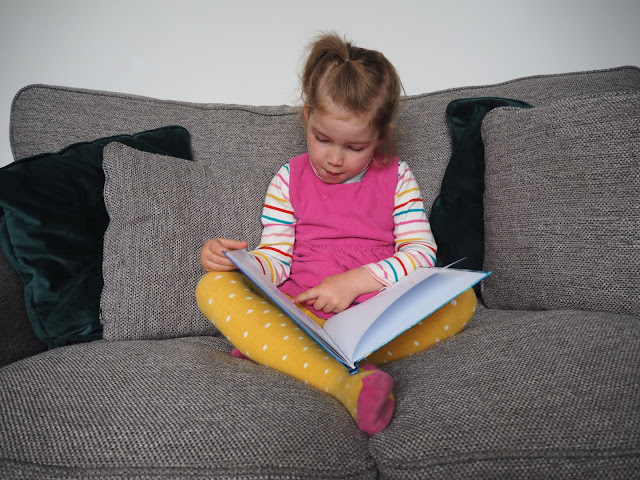
Through books, your child can learn more about the world around them and as plots twist and turn your child will also be able to build on their problem-solving skills - skills that go hand in hand with creative thinking.

Look At the Brighter Side of Things
Failure can stifle and hinder growth while focusing on the positives can encourage your child to try again and explore their creativity. This can teach them how to take positive learnings from any situation in life and make their ideas bigger and better.

Exploring Creative Risks
In order to create innovative concepts and ideas, risk-taking is needed, and encouraging your child to take reasonable risks from a young age can help them to do this.

Helping Your Child Become More Resilient

AD - This is a PR collaboration.

When we’re stressed our body changes to allow us to think faster, be more alert and to be capable of handling what comes our way. If it’s not controlled properly, or if we are in a state of stress for a long time, it can cause us to become annoyed, angry and upset. These are the basics of understanding resilience, and even as adults there are times where we can fail to stand up for ourselves.

It doesn’t mean it’s not impossible, though, and through practice and developing thought processes we can continue to be resilient through many struggles. These are things that should also be taught to your children, and to do that we’ve put together a guide with this girls prep school to show you where to begin.

Show who already supports them
They’ll have a lot of family members around them who want to see them do well, so it’ll be a great way for them to know about what support they already have around them. A lot of a child’s development is reliant on their self-esteem, positivity and motivation around others, which is often influenced by who helps them around the home and who they know they can turn to.

Show them that it’s okay to ask for help A huge part of understanding resilience means that it’s knowing who to call on if you’re in trouble. As children we want to know that our parents can help us when we need them, and showing that it’s okay to ask for that help when they need it will give them a huge boost in confidence.

Encourage free playtime
Time for a child to have fun alone or with friends will give them the chance to manage their behaviour, cognitive functions and independence skills. Activities like playing in a sand pit, going to the park with friends, playing with their own toys or using memory games as practice will keep your child stimulated as they learn.

Do you have any tips you would like to share?